Lethe Tanner Was Here
The story of Alethia Tanner, a self-empowered woman who bought her own freedom in 1810 and impacted generations.
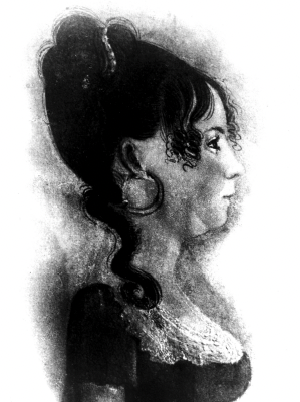
Lethe Tanner, or Alethia Tanner as we call her today, was born enslaved in 1781 just outside of Washington DC.
She died eighty-three years later in 1864, during our Civil War. But she lived long enough to see and experience the abolishment of slavery in Washington DC which happened in 1862 and then the signing of the Emancipation Proclamation on January 1, 1863 with the hope of resetting the north star of this enlightened country.
In 1810, Lethe provided funds to Joseph Dougherty, so that he could purchase her from her owner, Rachel Pratt. Then over the course of her life, she purchased and freed more than eighteen family and friends from slavery.
And despite being unable to read or write, she used her natural business acumen to provide financial and moral support to schools, and churches to help uplift the free and enslaved black community in Washington.
-
Timeline of Lethe’s life
1781
Alethia “Lethe” Tanner is born
Lethe has two older sisters — Sophia (b. 1770) and Laurana (b. 1778). They are born enslaved by Tobias and Mary Belt of Upper Marlboro, MD in Prince George’s County.
1785
Slaveowner Tobias Belt dies, leaving his widow Mary Belt to run the plantation.
Lethe, her siblings and 9 other enslaved people are enumerated in the List of Inventory of Tobias’ possessions. They are listed alongside household items such as places and linens, and along with farm equipment and livestock.
Mary Belt places an newspaper advertisement selling a “parcel of likely healthy country-born negroes.”
1795
Widow Mary Belt dies
Laurana, Lethe’s middle sister is sent to daughter Lucy Belt Addison. Sophia, Sophia’s children, and Lethe are to be with daughter Rachel Belt (Pratt) who inherits the Chelsea Plantation.
1803
Lethe’s name appears on Thomas Jefferson’s account with Doctor Edward Gantt
This indicates that Lethe as ‘hired-out’ to work in the White House during Thomas Jefferson’s term. Rachel Belt had recently married John WIlks Pratt and moved into Georgetown. Slaveowners often sought to hire-out their enslaved in the new city of Washington. Enslaved people with valuable skills such as carpentry, cooking, or housekeeper could garner decent money for their owners.
1807
Bell School opens for free Black children
Sophia’s husband, George Bell, along with Nicholas Franklin and Moses Liverpool starting the first school for Black children in Washington DC.
1810
Lethe Tanner is purchased and manumitted by Joseph Dougherty
Joseph Dougherty, an Irish immigrant from Londonderry Ireland served as Thomas Jefferson’s coachman during Jefferson’s Presidency. On July 7, 1810, Dougherty purchase Lethe for $275 from Rachel Belt Pratt. Then on July 10, 1810, Dougherty “set at liberty my yellow woman, Lethe, who calls herself Lethe Tanner, a slave who I purchased a few days ago of Mrs. Rachel Pratt.”
It has been understood that the money Dougherty paid to Pratt was money that Lethe saved on her own. The oral history has been that she sold vegetables across from the White House and was able to use that money to procure her freedom. The oral history also says that Rachel Belt Pratt was unwilling to free Lethe herself. So Lethe entrusted Dougherty to make the purchase and follow through with freeing her.
1821
Israel Bethel African Methodist Episcopal Church founded
Lethe, her sister Sophia, and Sophia’s husband George Bell were among the early supporters of a new church for Black residents around Capitol Hill. However the church building almost fell into foreclosure Lethe Tanner, and her sister and brother-in-law saved the church by paying off its debts.
1826
Lethe purchases her sister, Laurana Cook and 6 of her children from John Davidson
Laurana had been sold several times since she was given away after Mary Belt died in 1795. First, she had been sent to Lucy Belt Addison but it seems like she was quickly sold to Edward Nichols. Edward Nichols was in debt and mortgaged Laurana and her children. However when he defaulted on this, Laurana and her children were then sold to John Davidson.
The following year, Lethe purchases her nephew Thomas Cook for $275 from John Davidson.
By 1828, Lethe completes the purchase of all of Laurana’s children and their children. She is able to purchase: Hannah Cook and her 2 children, Annette Cook and her two children, Alethia Cook and her child, George Cook and Daniel Cook.
1834
Union Seminary, school for free Black children
Lethe’s youngest nephew, John Francis Cook, whom she freed in 1826 when was 16 years old, becomes the head of the old Smothers Schoolhouse and renames it Union Seminary.
It is here where he taught free Black children not only the basics of education, but also their own personal values. He used his school to help promote abolitionists ideas to his students.
1835
Snow Riot, John F. Cook flees, and Lethe purchases 6 more people
For three days, white rioters rampaged and vandalized black-owned businesses and institutions, including Union Seminary. Fearing that the mob would come after him, John Cook fled to Pennsylvania where he stayed for a year before returning home.
“The mob wanted Cook, a solemn free black man who was well-versed in Presbyterian theology and sought to educate every Negro child he could find. Cook was a firm opponent of drink and slaver”
Meanwhile, Lethe continued to purchase more people from slavery.
1838
Union Bethel African Methodist Episcopal Church founded
1853
Sophia Bell dies
In the name of God Amen I Sophia Bell of Washington City in the District of Columbia having a sound disposing mind memory and understanding knowing the certainty of death and the uncertainty of the time thereof and being desirous of settling worldly affairs before I go hence I therefore make and publish this my last will and Testament in the manner and form following to wit. First and principally I commit my soul into the hands of Almighty God who gave it and my body to the earth to be decently buried at the discretion of my Executor hereinafter named and after all my just debts and funeral charges are paid I will and bequeath as follows.
Item 1, I will and bequeath to my Daughter Margaret Lee all my wearing apparel that I may die seized with.
Item 2, I will and bequeath to my son Lloyd Bell Ten dollars that is providing he returns to Washington and if he does not then the Ten dollars to be paid to his son George Bell.
Item 3rd I will and bequeath to my son Enoch G. Bell the four notes I hold against him fifty dollars each with interest thereon.
Item 4, I will and bequeath to my daughter Harrieta Cornish the east half of lot D in square seven hundred and ninety seven with all and singular improvements thereon to her and her heirs forever, also I give and bequeath to the above named Harrietta Cornish and her heirs the residue of my estate both real and personal & mixed.
1855
Nephew John F. Cook dies at age 45
1862
Emancipation in Washington DC
1864
Alethia “Lethe” Tanner dies
March 3, 1864
Badly Burned
This morning, an aged colored woman, named Lethy Tanner, residing on the corner of 14th and H Streets, was badly burned by her clothes, taking fire from a grate. But notwithstanding her feebleness, she had the presence of mind, and seizing a rug, wrapped it around her, extinguishing the flames; not, however before her face and hands were badly burned. Dr. Hatch was immediately called in.and dressed her injuries. She is upwards of ninety years of age, and during the administration of President Jefferson she was his housekeeper. She came originally from Maryland, where she was a slave of the Belt family, but for upwards of forty years, she resided in the house in which she was burned. Her recovery, on account of her age, is doubtful.